Quick Enquiry
Thank you for your query!
Your inquiry has been received. We appreciate your interest.
Our team will review your message and get back to you as soon as possible.

Thank you for your query!
Your inquiry has been received. We appreciate your interest.
Our team will review your message and get back to you as soon as possible.




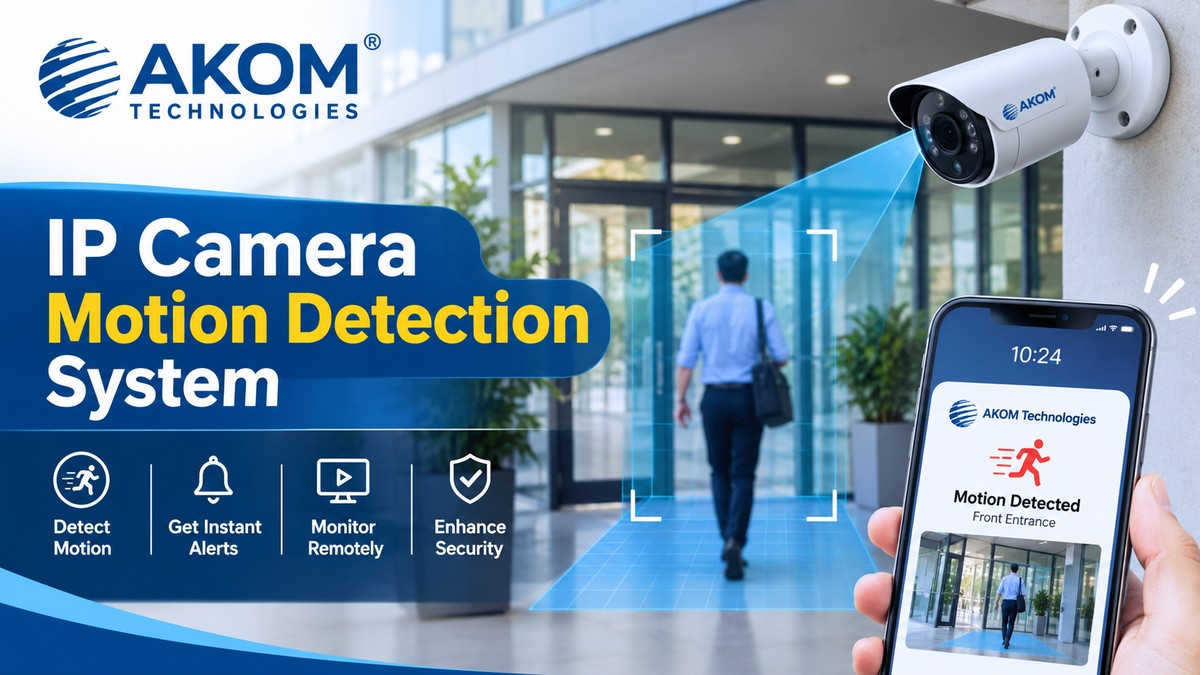
Offices, homes, and commercial and industrial premises are turning to security monitoring due to rising security concerns. With increasing security concerns, companies have shifted toward smart surveillance solutions that help in effective monitoring of activities, identifying suspicious movement, and handling potential threats.
CCTV cameras will traditionally record continuously, and sifting through hours of recordings can be a tedious, manually intensive task. However, with the sophistication of today's IP surveillance tech that includes features like motion sensors, on-demand notifications, remote viewing, and automatic recording, it overcomes this problem.
The IP Camera Motion Detection System is capable of sensing motion within the camera's field of view and initiating predefined actions such as recording video or sending alerts to authorized users. This enhances the efficiency of security and safeguards security teams from endlessly reviewing footage of these movements.
Knowing about motion detection and its features will also help businesses implement it and select the best security solution for their requirements.
An IP camera motion detection system is a networked surveillance system that includes an IP camera and a software/recording system that can detect motion in the subject area.
Instead of constant video recording like in traditional CCTV systems, a camera with motion detection can examine video frames and identify any variation to those frames that corresponds to movement.
• Start video recording.
• Instantly notifying of motion.
• Activating paired alarms.
• Recording footage of events.
• Alerting security officers.
• Turning on compatible surveillance equipment.
Such features enable organizations to monitor important areas more effectively while reducing unnecessary video storage and monitoring efforts.
Modern IP cameras also offer advanced video analytics, such as human detection, vehicle detection, intrusion detection, and line crossing, depending on the model and software setup.
Simply put, motion detection technology works by monitoring the video captured by an IP camera, analyzing it, and detecting a change in the area covered by the camera. Identification typically occurs in several steps.
1. Capturing Video
An image sensor in the IP camera is continuously recording video and streaming it to a network video recorder (NVR), video surveillance software, or the cloud.
2. Motion-based detection
The camera or surveillance software detects changes in a scene view by looking for differences between consecutive frames of video. Any movements that exceed detection thresholds may initiate an event.
3. Sensitivity choices
Administrators can configure the motion sensitivity, detection zones, and alert settings. This prevents over-alerting from minor environmental changes.
4. Activation Events
Motion detection can trigger security devices (if they are compatible with your system), notify you, or log the motion.
5. Monitoring and Alerting
Based on the system, authorized users will receive notifications on mobile apps, desktop programs, or linked monitoring platforms.
This ultimately enables security teams to react quickly to major movements and record footage when required.
When you're buying monitoring equipment, you'll want to know the features that affect detection accuracy and monitoring and security capabilities.
1. Motion detection in real time
Motion detection helps cameras to identify movement in the area of surveillance and to react by beginning recording or sending alerts. This keeps security staff aware of activity without having to watch video constantly.
2. Detection Areas Configurable
Users can establish specific areas along a camera's viewing path for movement detection. For example, businesses can monitor entrances, restricted areas, storage areas, etc., but can ignore constantly moving objects outside those areas.
3. Real-time Movement Alerts
Some systems offer movement alerts. Alerts can be sent to mobile apps, email, or linked surveillance systems.
4. Movement-Based Video Recording
Compatible systems may only record footage when they detect movement, as opposed to all the time. This can help optimize storage for an event.
5. Remote monitoring
Connected to the network, this allows authorized users to view the live camera feed and recorded footage. This offers additional advantages for companies with multiple sites.
6. Intelligent Video Analytics.
Intelligent Video Analytics can provide alerts for humans, vehicles, and instruction/line cross detection. These features provide more accurate monitoring than basic pixel-based motion detection.
7. Low Light/Night Vision Monitoring
8. Infrared Illumination and Low-Light Imaging: Infrared lights and low-light imaging allow monitoring at nighttime or in dark places with compatible cameras.
Industrial Motion Detection IP Camera
There are various sectors that motion detection can cover to ease security issues.
Corporate offices—companies can oversee their receptions, entry points, server rooms, and restricted departments. Motion alerts can also help security personnel detect unauthorized access when businesses are closed.
Retail Shops / Malls: Retailers can monitor billing counters, stock, access points, and utility rooms. Motion-Based Recording: It helps to identify critical security events.
Industrial Units and Warehouses: Industrial companies can monitor production areas, loading areas, equipment rooms, and restricted areas.
Homes and Apartments: Homeowners and housing societies can monitor entrances, parking areas, common areas, and hallways. Motion can notify residents on their mobiles.
Schools and Colleges: Improved campus security with surveillance of gates, labs, administrative offices, and other critical locations.
Hospitals and Health Care: Hospitals can use IP cameras with motion detection to monitor entrances or restricted areas without infringing on patient privacy in care areas.
• Convenience: Motion detection can be a very convenient feature for property and business owners.
• Enhanced Security Awareness: Instant alerts enable users to detect motion in the protected zones.
• Improved Incident Response: Security teams can respond to suspicious activity without the need for sifting through footage.
• Limited Video Storage: Video footage storage can be less useful if only a limited number of events are recorded, depending on system configuration.
• Remote Viewing: Approved users can connect to and view cameras on a variety of devices while away from the office.
• Monitoring Flexibility: Custom detection zones allow organizations to monitor specific areas of interest.
• Ease of Operation: Automatic detection and recording remove the need for constant human monitoring.
• Centralized Management: IP cameras can be centrally managed with NVRs that support multiple cameras or surveillance management software supporting the IP cameras in use.
With all these advantages, motion detection is certainly an option any organization should opt for as a means of enhancing security and surveillance management.
Think about the property layout and the goals you want to achieve with the monitoring and the technical specifications to make sure you purchase all the tools you need to make your surveillance system work.
Camera Resolution: Choose resolution appropriate for the viewing area and desired level of image detail.
Detection Sensitivity: Look at motion sensitivity, detection zones, and smart analytics in order to limit false alarms.
Network Compatibility: Consider Ethernet compatibility, bandwidth requirements, PoE, and integration into your existing network.
Storage Capacity: Assess NVR storage, hard drive size, recording intervals, and retention needs.
Night Vision: Choose cameras that offer sufficient infrared or other low-light capabilities to view footage at night.
Remote Viewing: Consider integration with mobile devices, computers, and other remote viewing requirements.
Other Gear Compatibility: Check compatibility with existing NVRs, alarm systems, and video management software.
Discussing these issues in detail helps to design a surveillance system that addresses the security needs of the business and can grow in the future.
Modern surveillance is a must for the protection of business premises, houses, and factories. Smart surveillance with motion triggers, auto-filming, and remote viewing provides businesses with better security awareness and more insight into important events of interest.
Akom Technologies delivers business communications and technology solutions that meet the evolving needs of modern businesses.
How to Select the Optimal Surveillance Solution for Your Business: 1. Camera Specs: Resolution Counts! Camera Specs, Motion Detection, Networks, and Integrations!
With the right technology, security operations can be enhanced, whether you are looking to protect an office, commercial complex, school, or warehouse.
Discuss with the staff at AKOM Technologies your technology needs and equipment recommendations for your facility.
1. What is a motion detection system using an IP camera?
An IP camera motion detection system is a network camera system that detects motion within the camera's field of view. Using this motion detection system, an IP camera can begin recording automatically, send alerts, or carry out other predefined security actions.
2. How Does Motion Detection Work With IP Cameras?
In IP cameras or connected surveillance software, an image is analyzed across successive video frames, detecting changes in the scene. If the motion detected is above the thresholds in your system, your system will trigger an alert or event.
3. Do IP cameras notify you immediately when there is motion?
Yes. Some IP cameras have compatible video surveillance platforms that can send live-motion alerts to your mobile apps, emails, and monitoring app.
4. Will motion detection save CCTV storage?
Yes. Motion-based recording only records when it detects motion with events set by movement; thus, it can save on storage compared to continuous recording. Exactly how much it saves is dependent upon the amount of activity and the recording settings.
5. Can an IP camera sense motion in the dark?
Yes. Cameras with IR night vision or good low-light sensors will detect motion in darkness. How well their motion detection works depends on the light, camera, and environment.
6. How does basic motion detection differ from intelligent video analytics?
Basic motion detection only detects changes in the video frames and can cause false alarms due to shadows, light changes, or moving objects. Smart video analytics can detect specific objects/activity like people, vehicles, and intrusions (camera-dependent).
Subscribe to our newsletter for a weekly dose of news, updates, helpful tips, and exclusive device.
 sales@akom.in
 +91-9811829876