Quick Enquiry
Thank you for your query!
Your inquiry has been received. We appreciate your interest.
Our team will review your message and get back to you as soon as possible.

Thank you for your query!
Your inquiry has been received. We appreciate your interest.
Our team will review your message and get back to you as soon as possible.




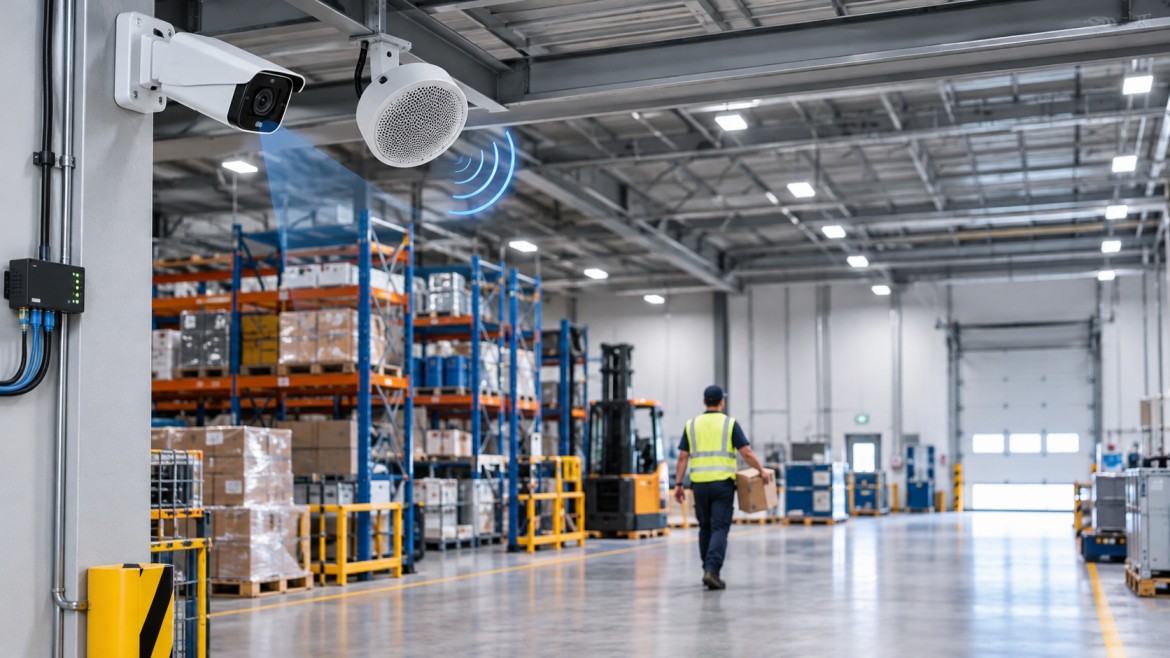
Motion Detection Voice Alert System: Uses, Benefits, and Features
Today’s security systems have to do more than just record activity. Businesses, factories, warehouses, offices, and residential communities are increasingly in need of solutions that can detect movement, identify configured events, and immediately communicate warnings. In the traditional way, CCTV systems allow security staff to see what is happening, but they don’t always react in the moment if something unusual happens.
To meet this requirement, a motion detection voice alert system is designed and developed, which integrates motion detection technology with automated audio announcements. If a compatible camera or detection system finds a defined event, the solution can broadcast a pre-recorded voice message through attached speakers. This way, organizations can make announcements, issue safety instructions, and send out security warnings, not just through manual intervention.
Such systems can allow for more intelligent security management throughout India in commercial buildings, industrial facilities, educational institutions, parking areas, and other sites where timely communication is essential.
AKOM Technologies provides automatic announcement solutions, which can be integrated with IP camera events to network audio equipment and assist organizations in creating more responsive security and communication environments.
What are a voice alarm system and motion detection?
A motion detection voice alert system is a composite system that detects motion in a monitored area and automatically plays a pre-recorded voice announcement when configured conditions are met.
This system usually includes IP cameras or compatible detection devices, event processing software, a network connection, and IP speakers or a public address system. Depending on the configuration, it can respond to general motion, a person entering a restricted area, movement of a vehicle, or crossing of a virtual boundary.
For example, if a motion is detected at the entrance to a restricted warehouse after hours, the system can play a message such as, “Warning! This is a restricted area. “Get security.
This method turns passive video surveillance into active communication. Rather than simply recording an event, the system is able to provide a real-time warning to people in the affected area.
How does a voice alert system of motion detection work?
A typical system follows a simple process.
1. Look at the area
IP cameras monitor specific areas such as entrances, hallways, parking areas, production floors, and restricted zones constantly. The cameras will be placed according to the security needs of the site.
2. Movement and Event Detection
The camera or analytics software hooked up to it senses motion or another event you have set up. Depending on compatibility, the advanced systems may support analytics for person detection, vehicle detection, intrusion detection, and line crossing.
3. Processing of triggers
The control software compares the detected event with predefined rules. These rules define which camera triggers an announcement, what message is played, and to which speaker zone.
4. Use the Voice Alert
When the trigger conditions are met, the system sends the selected message to a compatible speaker or public address system. Messages may include security warnings, restricted area notices, or workplace safety instructions.
5. Prompt Reply Encouraged
The people in the monitored area can hear the warning and can respond appropriately. Security staff review the event and follow the organization's incident response process.
Organizations looking into this kind of integration between IP camera events and automated audio announcements will be interested in AKOM’s PAS500 automatic announcement system.
Important Characteristics of a Voice Alert Motion Detection System
1. Automated voice messaging
The system can play predefined messages when configured events happen. This enables organizations to automate repetitive security warnings and safety instructions without the need for an operator to make each announcement manually.
Messages are adaptable to different locations and operational requirements.
2. Real-time event-driven alerts
A suitable system can respond to supported camera events, including motion, intrusion, or entry into a defined zone. This means organizations can build in different responses for different types of activity.
Speed and accuracy of detection is dependent on the camera, analytics software, network, and setup.
3. Camera-to-Speaker Zone Correlation
For larger facilities, it may not be necessary to broadcast every alert throughout the entire facility. You can use zone mapping to have a configured camera event announce to the associated speaker zone.
For example, the loading-bay speakers can be activated by motion near a warehouse loading bay, rather than disturbing unrelated departments.
4. Pre-Recorded & Custom Messages
Pre-configure messages for a variety of situations, including restricted access, parking guidance, after-hours security, and routine safety reminders.
Clear and consistent messages make it easier for people to quickly grasp what action is needed. Emergency communication should be carefully planned and consistent with the facility’s established safety procedures.
5. Timed Automation Security
Some solutions offer the ability to have different rules for working hours, weekends, and after hours. A business may configure an announcement for movement detected in a restricted area when the facility is closed.
When and where an event occurs, scheduled rules make security responses more relevant.
6. Network Integration and Centralized Control
IP-based audio systems can connect together cameras, compatible software, and network speakers through a suitable network infrastructure.
Depending on the solution, administrators can centrally manage event rules, message assignment, and speaker zones. This can make system administration easier across multiple rooms, buildings, or facilities.
Advantages of a Motion Detection Voice Alert System
Better Security and Deterrent
Voice warnings can immediately alert people that what they’ve done has been noticed. In areas where access is limited, this may deter unauthorized access and encourage people to leave or contact security.
The system should supplement, not replace, controls for access, physical barriers, CCTV surveillance, and trained security personnel.
Quick Reaction to Detected Events
Facilities often have lots of cameras, and manual monitoring can result in a delayed response to activity. Automated announcements serve to communicate warnings as soon as configured trigger conditions are reached.
Useful in warehouses, industrial premises, and other environments where a prompt instruction may help to reduce confusion.
Less manual labor
Security and facilities teams are often juggling many responsibilities. Automating routine alerts reduces the need for staff to issue repetitive announcements and frees them up to focus on verification, investigation, and incident management.
Better Communication of Workplace Safety
Factories and warehouses may have areas for equipment, for moving vehicles, and restricted production sections. When safety reminders are needed, a suitable voice alert system can be activated by supported detection events.
These announcements should be in addition to formal training, machine safety systems, emergency alarms, and workplace procedures.
Scalable Security Management
A small premises can have an integrated network solution designed for it and expanded to cover additional cameras and speaker zones. This flexibility allows organizations to plan for evolving security requirements.
In expansion, you need to consider the network capacity, device compatibility, speaker coverage & centralized management needs.
Motion Detection Voice Alert System Applications in India
Factories and Manufacturing Plants
Industrial sites in proximity to machines, production lines, restricted areas, and facility perimeters can utilize automated voice alarms. On a configured event, the system can provide a pertinent warning on the specified speakers.
Warehousing & Logistics Centers
Loading Operations, Vehicles, Warehousing, and Inventory. It can also be used to warn the persons in the vicinity of limited storage zones or in areas designated for vehicle movement.
Office and commercial buildings
Offices can put voice alerts around entrances, server rooms, parking facilities, and access-controlled sections. It can be used to let people know an activity is seen in certain places (after-hours notifications).
Schools and other educational facilities.
Educational campuses can place appropriate systems around gates, corridors, parking areas, and restricted facilities. Automated messages can be part of security communications and are consistent with campus safety policies.
Residential Communities
Apartment complexes and gated communities could install motion-triggered voice warnings at entrances, parking lots, and other common spaces. Messages can remind visitors of access procedures or inform people about areas that are off-limits.
Parking and Transportation Facilities
Voice alerts are available in parking facilities at designated access points, restricted vehicle areas, and traffic-management zones. Proper integration can help communicate clearly to drivers and pedestrians.
How to Select the Right System
Before installing a motion detection voice alert system, think about the following:
• Detection capabilities: Verify that the system supports the motion, person, vehicle, or intrusion events you require.
• Integration compatibility—check that the cameras, event processing software, and audio equipment can all communicate with each other.
• Speaker areas, average—Choose the right speakers for indoor rooms, outdoor areas, and noisy industrial settings.
• Customization of messages: The system should allow for the necessary pre-recorded announcements and the language of choice.
• Zone-based control: Confirm that alerts can be sent to the appropriate regions when required.
• Network reliability: Assess connectivity, power requirements, cybersecurity, and system monitoring.
• Scalability: Select a solution that can be expanded with additional cameras and speaker zones if the facility grows.
• Installation & support. Work with an experienced provider to install triggers, test announcements, and keep the system running.
If you want an integrated solution, investigate AKOM’s automatic announcement system and discuss with the provider to confirm camera compatibility, supported event triggers, and audio setup.
Conclusion
Modern security is enhanced by the Motion Detection Voice Alert System that combines video event detection with immediate audio communication. Its capabilities can help organizations deliver automated warnings, reduce repetitive manual announcements, increase awareness of detected activity, and enable more efficient security operations.
The technology has applications in factories and warehouses, offices, educational institutions, and residential communities across India. Camera placement, event configuration, voice messages, and speaker coverage are best when carefully considered.
AKOM Technologies offers automatic announcement solutions for companies that want to connect compatible IP camera events to network audio systems. By considering their site needs and integration needs, a business can develop a security solution that allows for more timely communication and more responsive facility management.
FAQs (Frequently Asked Questions)
1. What is a motion detection voice alert system?
This is a security solution that can detect movement or other events you set, and it will automatically play a pre-recorded voice message through compatible speakers. It can be used for security warnings, restricted area notifications, and safety instructions.
2. How does a voice alarm that detects motion work?
The configured event is detected by a compatible camera or detection device. The control system handles the event and invokes the assigned voice message over the correct speaker or speaker zone.
3. Where can I install motion detection voice alert systems?
They can be installed in factories, warehouses, offices, educational institutions, residential complexes, parking facilities, and commercial buildings depending on the site’s security and communication requirements.
4. Are you able to work with existing IP cameras?
If the cameras, analytics software, and announcement platform support the required event integration, it can work with existing IP cameras. Check compatibility before installing.
5. What are the main advantages of a voice alert system with motion detection?
The main benefits are automated alerts, enhanced security awareness, faster communication, less manual announcing work, and specific alerts in selected zones.
6. Can the voice alert system for motion detection improve safety in the workplace?
“Yes. When properly set up, it can broadcast safety instructions when supported events happen around defined equipment zones, restricted areas, or vehicle movement areas. It is to complement existing safety controls and emergency procedures.
Subscribe to our newsletter for a weekly dose of news, updates, helpful tips, and exclusive device.
 sales@akom.in
 +91-9811829876