Quick Enquiry
Thank you for your query!
Your inquiry has been received. We appreciate your interest.
Our team will review your message and get back to you as soon as possible.

Thank you for your query!
Your inquiry has been received. We appreciate your interest.
Our team will review your message and get back to you as soon as possible.




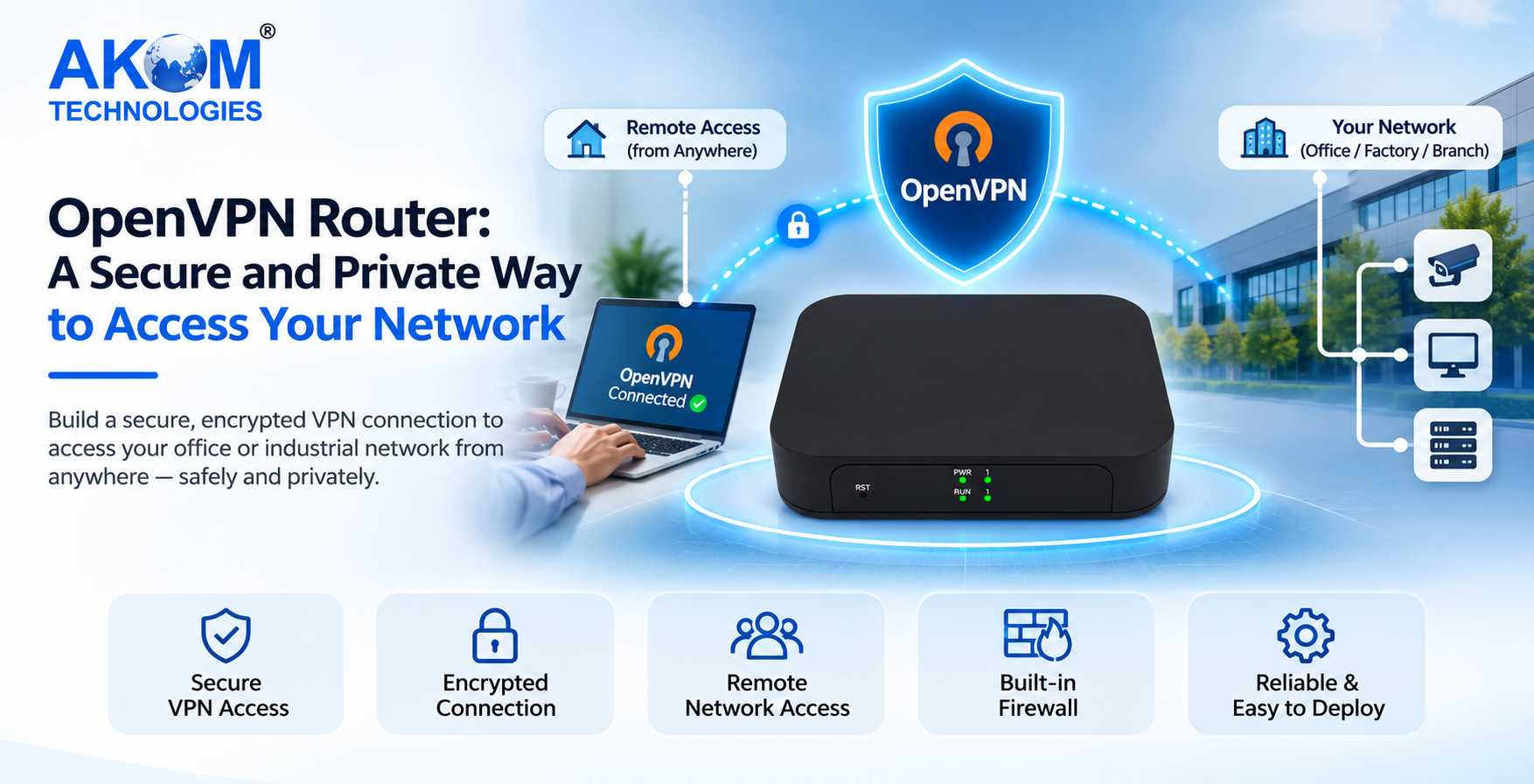
In today’s world, reliable and secure Internet connections are essential for business. Organizations, from corporate offices to IT companies, remote teams, and communication service providers, share sensitive information across networks on a daily basis. If there are no suitable security measures, this data may be exposed to interception, unauthorized access, or other cybersecurity risks.
An OpenVPN Router can solve these problems by enabling Virtual Private Network (VPN) connections, which encrypt the data traveling between compatible devices and networks. Rather than having the usual internet connection, companies can employ VPN technology to set up a secure line of communication for approved users.
Companies in India are increasingly using cloud applications, telecommuting arrangements, and internet-based communication systems, so secure network connectivity is an important consideration. A good VPN router will assist organizations in connecting branch offices, securing remote access and managing network communications more effectively.
In this guide, we will explore how OpenVPN technology works, its key features and business benefits, practical use cases, and the factors that you should consider when choosing a VPN router.
What Is an OpenVPN Router?
An OpenVPN router is a network device that has OpenVPN, a widely used VPN protocol for establishing encrypted connections over IP networks. Depending on the device, the router can be a VPN client, a VPN server, or a gateway between networks.
When a VPN connection is properly configured, the data traveling through the tunnel is encrypted between the two endpoints. This also prevents information from being read by unauthorized parties while in transit.
For example, an organization with remote employees can deploy a compatible VPN setup that allows authorized staff to access only certain internal resources without exposing those services directly to the public internet.
AKOM Technologies’ AG20 Open VPN Router is a networking solution for small to medium-sized businesses and small-office/home-office environments. OpenVPN support, additional VPN protocols, and VoIP integration are among the published features.
How Does an OpenVPN Router Work?
Having an idea of the fundamental working process is important for businesses to determine if this technology is suitable for their networking needs.
1. Setting Up a VPN Connection
The router is configured for the needed VPN settings, such as server information, authentication credentials, and certificates where required. A corresponding VPN endpoint then points to the configured server or network.
2. Network traffic encryption
Once the VPN tunnel has been established, the supported traffic that passes through it is encrypted. This makes it difficult for unauthorized parties to read the protected data as it travels across the network.
Protection varies depending on the protocol configuration, authentication, encryption, and security practices in use at both endpoints.
3. User and Device Authentication
VPN Authentication ensures that only permitted users or devices are allowed to connect. Depending on the deployment, this could be certificates, user names, passwords, or other supported authentication methods.
It is essential to secure business resources with strong authentication and appropriate access permissions.
4. Connecting Remote Users and Sites
Once authenticated, users or networks can access the resources permitted by the VPN configuration. These could be internal applications, servers, communication systems, or shared business resources.
Exactly what you can access depends on routing rules, firewall policies, and network permissions.
Key features to consider when buying an OpenVPN router
1. Support for OpenVPN Protocol
Tested OpenVPN compatibility is the most important requirement. Check the device for the necessary server or client features and compatibility with your existing VPN infrastructure.
Routers support various VPN protocols, so businesses can choose the one that best fits their network architecture.
2. Powerful Encryption and Authentication
You need proper encryption, reliable authentication, and properly managed credentials for secure VPN deployment. Review the manufacturer’s documentation to understand supported configurations and available security controls.
It’s also important to regularly update firmware and use secure administrative access.
3. Strong Network Performance
VPN encryption and routing require resources to process. Throughput can be affected by router performance, especially when multiple users are transferring files, accessing cloud applications, or making internet-based calls simultaneously.
Before you decide on a device, consider the expected number of users, internet bandwidth, VPN throughput, and the amount of concurrent traffic.
4. The Different VPN Protocols
Some business routers support protocols like IPsec or SoftEther alongside OpenVPN. Supporting multiple protocols can offer flexibility in connecting disparate systems or meeting existing network requirements.
However, the choice of protocol should depend on compatibility, security requirements, and the design of the organization’s network.
5. Integrated Business Communication
A business that uses Voice over Internet Protocol (VoIP) might need a router that will work with their existing communications infrastructure.
VKOM’s product information for the AG20 lists two FXS ports, a number of supported voice codecs, and VPN features. This makes it relevant to businesses looking to merge their networking and telephony requirements. Always check with your prospective telephone system first before you roll out.
Advantages of Employing an OpenVPN Router
Enhanced Data Protection
Supported network traffic can be encrypted through an OpenVPN connection, helping to secure sensitive information as it traverses untrusted networks. This is crucial for organizations managing confidential documents, business communication, and internal applications.
But VPN encryption is only one layer of security. Firewalls, control of access, endpoint protection, and secure application configurations are still needed.
Remote Access Security
Remote employees may require access to company systems while working from home, while traveling, or working from another office. A properly configured VPN can create a secure path to authorized internal resources.
Companies should employ least-privilege access rules so that employees have access to only the systems they need to do their jobs.
Connectivity of Office Locations
Organizations with more than one branch may need to link internal resources across different locations. By properly setting up a VPN, you can establish safe communication between the supported networks over the internet.
Beneficial for companies that share business applications, internal servers, or communication services between offices.
Flexibility in Business Networking
Routers with VPN functionality can satisfy many different deployment requirements, including remote access and connecting multiple network locations. Multi-protocol devices also help to integrate with the existing infrastructure.
“The right model means organizations can balance security, performance, scalability, and cost,” he said.
Support for Internet-Based Communications
Businesses using VoIP systems can benefit from a network design that takes secure connectivity and voice traffic into consideration. Proper configuration can help maintain the quality of communications and protect supported data in transit.
The quality of the voice still depends on the bandwidth, latency, jitter, and packet loss, and the configuration of the whole network.
Popular Uses of OpenVPN Routers in India
IT Companies and Corporate Offices
Businesses can use VPN connectivity to allow authorized employees to securely connect to internal tools, servers, and shared resources.
Small & Medium Business
VPN routers can be leveraged by small businesses to connect devices in the office, support remote employment, or protect communication between locations, all without building a dedicated private network.
Remote work environments
A properly configured VPN can be used by remote employees to access company resources, reducing the need to expose internal services directly to the Internet.
Networking Branch Office
In multi-site companies, supported office networks can be connected via VPN technology, and some resources can be shared securely.
Business Telephone & Voice Over IP
Some organizations require VPN connectivity, IP telephony, or compatible telephone gateway equipment. You can do this with the right router if you have a compatible VPN, voice platform, and network setup.
How to Pick the Right VPN Router
Before you buy a VPN router, make sure to consider your business needs.
• Number of users: Decide how many users and concurrent VPN connections you need.
• VPN throughput: Test expected performance under encryption rather than just relying on standard routing speeds.
• Protocol compatibility: Verify OpenVPN support and other protocols required by your infrastructure.
• Security controls: Verify authentication, firewall features, firmware updates, and administration access.
• Connectivity options: Check for WAN and LAN interfaces, compatibility with internet service, and any telephony ports required.
• Manageability: Investigate configuration tools, monitoring capabilities, and the availability of technical support.
• Scalability: Choose a device that can accommodate the expected growth in users, traffic, and network locations.
The AKOM AG20 Open VPN Router is a product that is relevant to evaluate against the intended network and telephony setup if companies are looking at these requirements.
Best Practices for Secure VPN Access
Selecting the right hardware is just the first step. Keep the router firmware updated and use strong, unique administrative credentials. Secure VPN credentials and certificates, revoke unnecessary access rights, and disable management services not required.
Configure firewall rules properly and monitor VPN activity for any abnormal connection attempts. Where possible, leverage the supported VPN infrastructure to use multifactor authentication and maintain a documented process for revoking access when employees leave the organization.
Businesses should also test connectivity, performance, and failover behavior before deploying a VPN solution across multiple users or office locations.
Summary
A correctly configured VPN can help businesses to establish encrypted network connections, support secure remote access, and connect office locations through an OpenVPN router. Its value depends on the choice of appropriate compatible hardware, the application of appropriate security controls, and the ability of the device to handle expected traffic.
VPN-enabled routers can be a useful part of a larger network security strategy for Indian businesses, IT teams, and communication service providers. Organizations relying on VoIP or business telephony should also confirm that the chosen device has the right capabilities for their communication needs.
One option for business networking and compatible telephony applications is AKOM Technologies’ AG20 Open VPN Router. Looking at security features, VPN performance, protocol compatibility, and long-term support can help make a more informed purchasing decision for businesses.
Frequently Asked Questions FAQs
1. What is an OpenVPN Router?
An OpenVPN router is a network device that supports OpenVPN connections to create encrypted communication tunnels. Depending on the capabilities it possesses, it can help connect remote users, devices or office networks securely.
2. OpenVPN Router and Network Security: How does an OpenVPN router increase network security?
It encrypts traffic supported by a correctly configured VPN tunnel. This helps to protect data in transit. Authentication and control of access help restrict connections to authorized users and devices.
3. Can an OpenVPN router be used for remote employment?
"Yeah. When set up for remote access, it can allow authorized employees to securely access select company resources from outside the office.
4. Is an OpenVPN Router good for small businesses?
Yeah. VPN-capable routers can also be used by small businesses for remote access, branch connectivity, and secure access to internal resources. The appropriate model depends on the number of users, the expected traffic, and the features required.
5. Can I use a VPN router with VoIP systems?
Some VPN routers have business telephone features or can be used with compatible VoIP infrastructure. Before any installation, businesses should check for protocol compatibility, routing requirements, and voice performance.
6. What should I look for when buying an OpenVPN router?
- Check OpenVPN client/server support - Check VPN throughput - Check supported connections - Check authentication options - Check firewall features - Check network interfaces - Check firmware updates and tech support If you need telephony, also verify compatibility with your existing voice system.
Subscribe to our newsletter for a weekly dose of news, updates, helpful tips, and exclusive device.
 sales@akom.in
 +91-9811829876